The Painting Tradition
Richard Daiensai Kirsten’s account
A firsthand account of Kendo Kano, the wandering priest who taught my grandfather the single-stroke serpent painting tradition.
Dorje is a third-generation Buddhist householder yogi trained under Chagdud Tulku Rinpoche, Jigme Tromge Rinpoche, Lama Padma Dorje Rinpoche, and Lama Drimed in the practices of winds and channels, and the Great Perfection in the Nyingma tradition. He spent 12 years living in a mountain retreat center in Northern California, studying the empty nature of mind, wandering amongst rattlesnakes, and contemplating the ever-changing serpentine flow of mountain creeks. He was taught the sacred art of painting and imbuing the serpent painting talismans by his grandfather, Richard Daiensai Kirsten, who learned it from Khendo Khano Sama.
Master Dragon Painter
of Japan
By Richard (Daiensai) Kirsten
Written for the Seattle Post-Intelligencer. Clipping supplied by Dorje Kirsten. The author’s period wording and transliterations are retained, with print line breaks joined. This account describes the beliefs and practices Daiensai encountered.
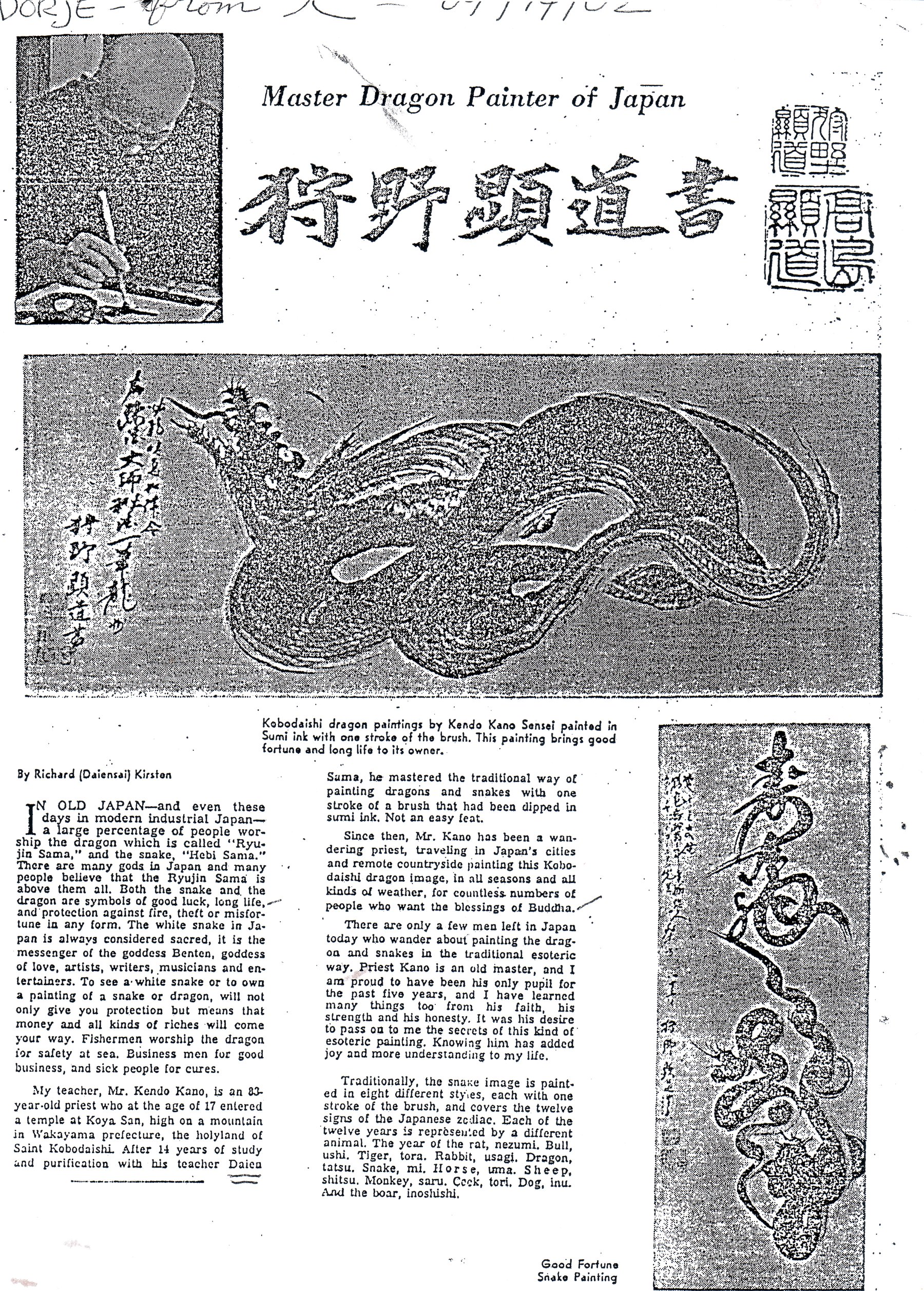
In old Japan—and even these days in modern industrial Japan—a large percentage of people worship the dragon which is called “Ryujin Sama,” and the snake, “Hebi Sama.” There are many gods in Japan and many people believe that the Ryujin Sama is above them all. Both the snake and the dragon are symbols of good luck, long life, and protection against fire, theft or misfortune in any form. The white snake in Japan is always considered sacred, it is the messenger of the goddess Benten, goddess of love, artists, writers, musicians and entertainers. To see a white snake or to own a painting of a snake or dragon, will not only give you protection but means that money and all kinds of riches will come your way. Fishermen worship the dragon for safety at sea, Business men for good business, and sick people for cures.
My teacher, Mr. Kendo Kano, is an 83-year-old priest who at the age of 17 entered a temple at Koya San, high on a mountain in Wakayama prefecture, the holyland of Saint Kobodaishi. After 14 years of study and purification with his teacher Daien Sama, he mastered the traditional way of painting dragons and snakes with one stroke of a brush that had been dipped in sumi ink. Not an easy feat.
Since then, Mr. Kano has been a wandering priest, traveling in Japan’s cities and remote countryside painting this Kobodaishi dragon image, in all seasons and all kinds of weather, for countless numbers of people who want the blessings of Buddha.
There are only a few men left in Japan today who wander about painting the dragon and snakes in the traditional esoteric way. Priest Kano is an old master, and I am proud to have been his only pupil for the past five years, and I have learned many things too from his faith, his strength and his honesty. It was his desire to pass on to me the secrets of this kind of esoteric painting. Knowing him has added joy and more understanding to my life.
Traditionally, the snake image is painted in eight different styles, each with one stroke of the brush, and covers the twelve signs of the Japanese zodiac. Each of the twelve years is represented by a different animal. The year of the rat, nezumi. Bull, ushi. Tiger, tora. Rabbit, usagi. Dragon, tatsu. Snake, mi. Horse, uma. Sheep, shitsu. Monkey, saru. Cock, tori. Dog, inu. And the boar, inoshishi.
Illustration captions
Kobodaishi dragon paintings by Kendo Kano Sensei painted in Sumi ink with one stroke of the brush. This painting brings good fortune and a long life to its owner.
Good Fortune Snake Painting
From the Kirsten family archive.