Richard Kirsten Daiensai
From the family archive · 1920–2013
Richard Kirsten Daiensai went to Japan to study printmaking. In a Zen temple in Kamakura, he found a way of painting that would change what he paid attention to for the rest of his life.
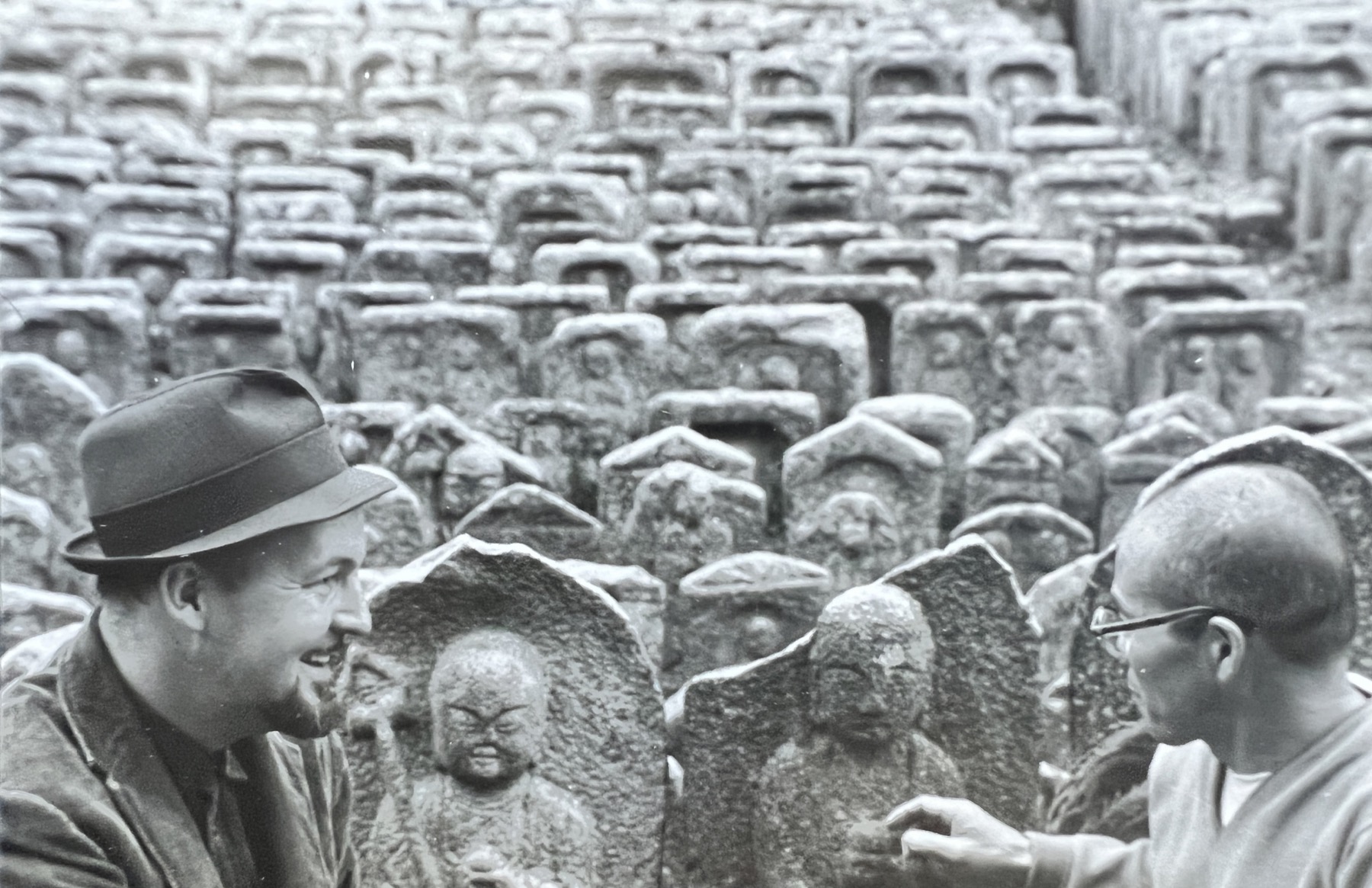
A painter at Zuisenji
Born in Chicago in 1920, Kirsten studied at the Art Institute of Chicago before settling in Seattle. He joined the Seattle Post-Intelligencer in 1950 and went on to lead its editorial art department. His interest in Japanese woodblock prints took him to Japan in 1958. There he met the Zen teacher Oshita Toyomichi at Zuisenji in Kamakura. He returned to the temple over the years to paint and study, and in 1967 was ordained a Zen priest. From then on, he signed his work Kirsten-Daiensai. Japan remained part of his working life for decades. He sought out remote temples where he could paint, and Sado Island became a favorite place to work. The Tacoma Art Museum’s artist record gives an overview of his life and work.
Painting with no mind
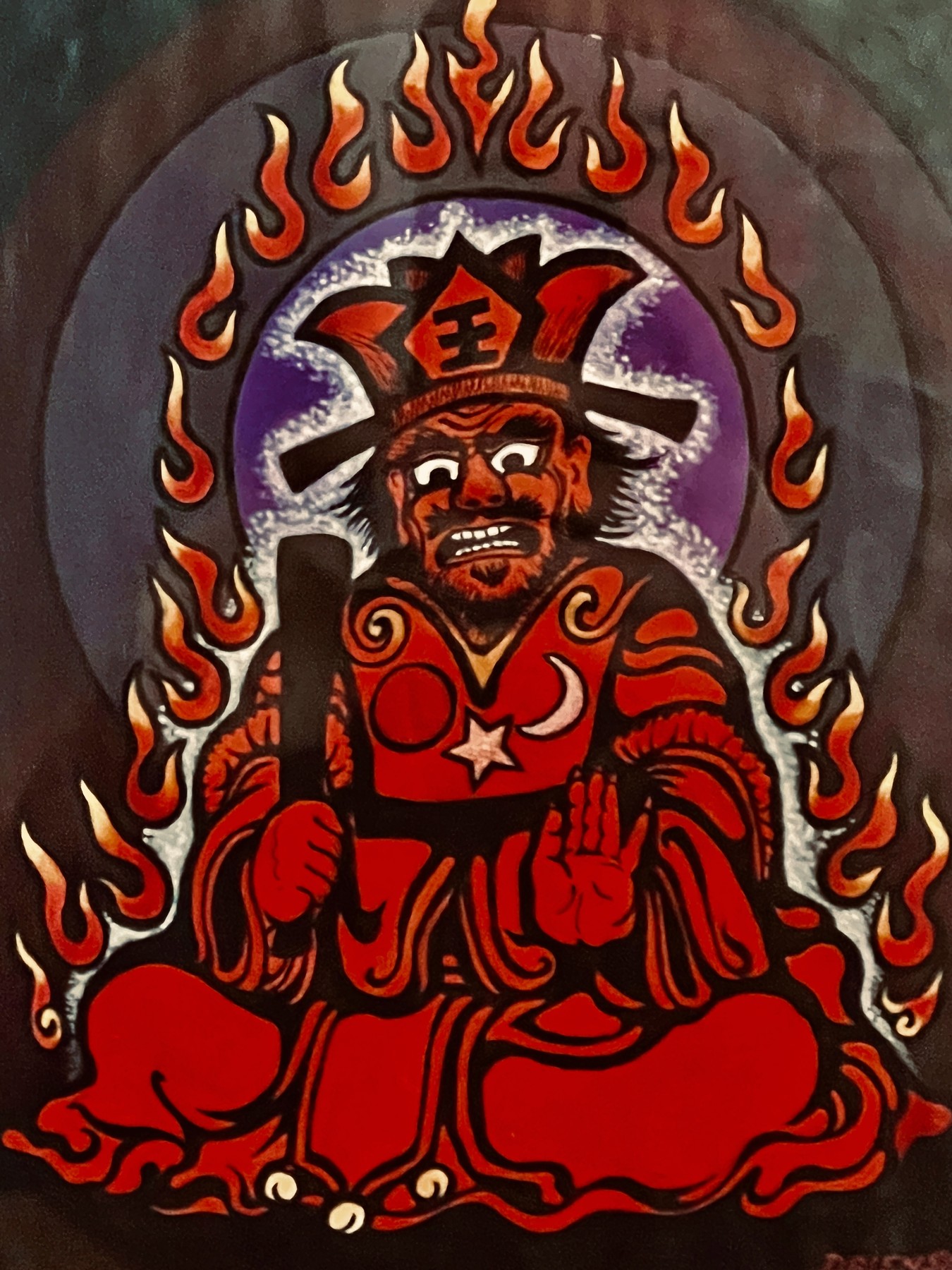
In an interview about his exhibition The Return of the Voyager, Daiensai remembered bringing some decidedly dark pictures to the temple. Over time, chanting the sutras, sitting in meditation, and sharing the routines of temple life changed what he noticed. Darkness remained in the paintings, but it no longer had the whole field to itself. He described much of his work as arising from mushin, or “no mind.” In some paintings he began with symmetrical blots of paint and discovered figures such as Kannon, the bodhisattva of compassion, within them. The painter could make a mark and wait to see what it offered.
Teaching through the brush
In Dorje Kirsten’s account of his grandfather, Daiensai’s Zen teacher instructed him to teach through painting. His training in single-stroke serpent painting came through a different teacher: Kendo Kano, the Yamabushi priest he describes in Master Dragon Painter of Japan. Daiensai later visited Dorje when he was living at a mountain retreat center in Norther California, Rigdzin Ling, and passed the serpent painting practice to Dorje, giving him the name Dorje Shinno as his Buddhist Serpent Painting lineage name. For Daiensai, two strands meet at the brush: the Zen training that shaped his attention, and the particular art of painting a serpent in one continuous stroke.
Paintings from the family archive
Explore Richard Kirsten’s biography and works at the Tacoma Art Museum.